
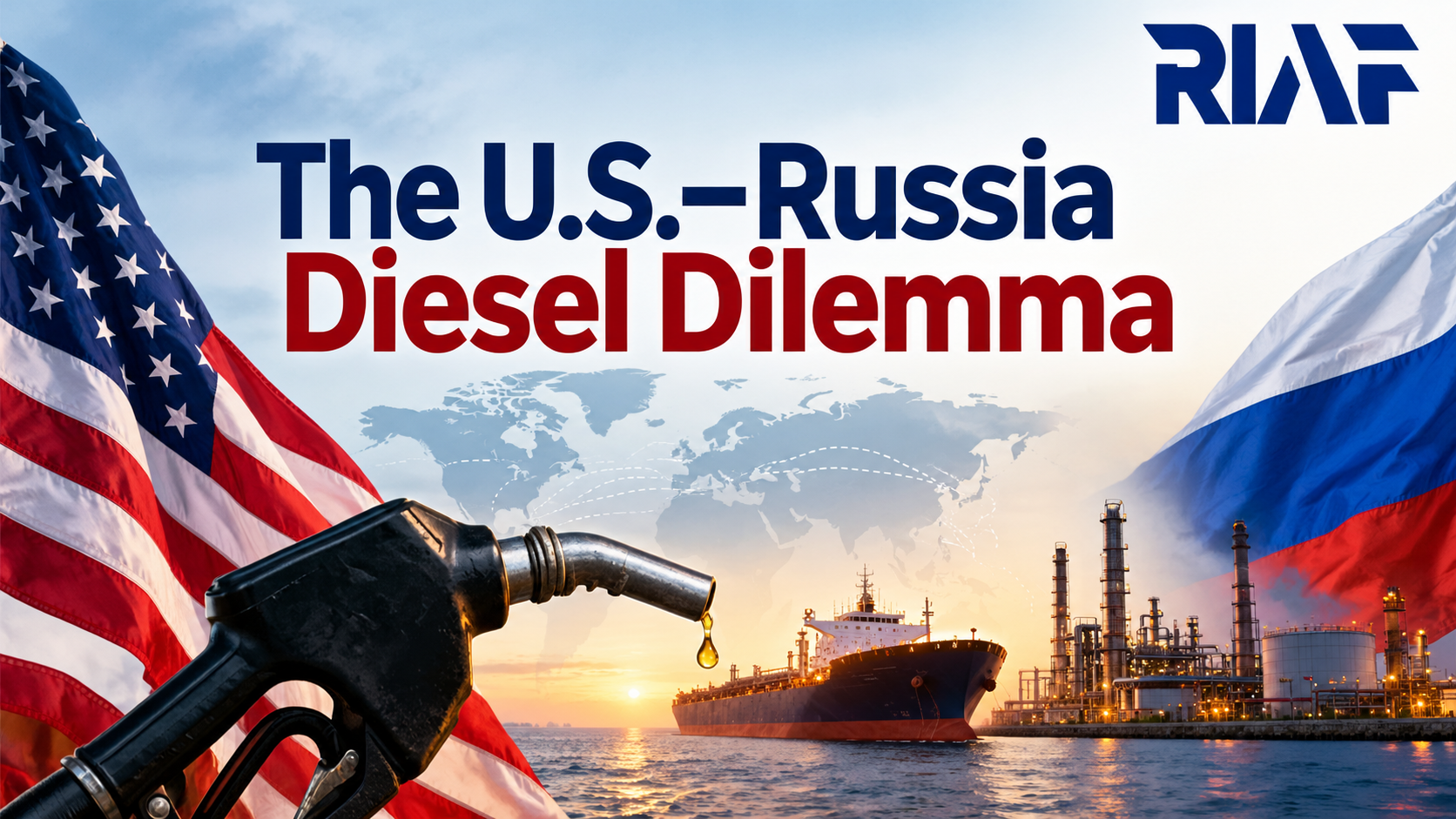
The contemporary intersection of global energy markets, international diplomacy, and domestic political calculations has once again brought the complex relationship between the United States and Russia into sharp focus. In October 2026, United States President Donald Trump announced a bilateral arrangement with Russian President Vladimir Putin to supply substantial quantities of diesel fuel to both the American and broader global markets. This sudden policy shift emerged against a backdrop of surging fuel prices driven largely by escalating conflicts in the Middle East, particularly the ongoing war involving Iran. However, rather than being received as a pragmatic economic solution, the announcement has ignited a fierce political controversy, drawing intense bipartisan criticism within the United States, raising difficult questions about the consistency of international sanctions, and provoking sharp reactions from international allies and adversaries alike.
To understand the gravity of this political and economic pivot, one must examine the baseline of American foreign policy toward Russia established following the 2022 invasion of Ukraine. For years, successive United States administrations maintained a strict embargo on Russian petroleum products, aiming to systematically choke off the financial lifelines supporting the Kremlin's military operations. The legislative framework surrounding these measures was recently reinforced by a bipartisan sanctions bill, often referred to as the legislation honoring the late Senator Lindsey Graham, which endowed the executive branch with robust punitive authorities, including potential tariffs of up to one hundred percent on foreign entities facilitating the procurement of Russian energy resources. Consequently, the announcement of a direct diesel procurement deal with Moscow represents a dramatic reversal, shifting from a policy of strict economic isolation to direct commercial engagement with a sanctioned state.
The domestic political fallout within the United States was immediate and intense, cutting across traditional party lines while drawing particularly sharp rebukes from Democratic lawmakers and select policy traditionalists. Critics argued that the agreement directly violates both the letter and the spirit of recent bipartisan legislation designed to punish nations and entities engaging with Russia’s energy sector. Prominent senators voiced deep indignation, asserting that purchasing fuel from Moscow effectively subsidizes the continuation of the conflict in Ukraine and undermines the collective sacrifices made by Western allies. Furthermore, opponents raised questions regarding consistency, pointing out the inherent contradiction in penalizing third-party nations for acquiring Russian petroleum while simultaneously entering into a direct supply agreement for the American domestic market. This dissonance has fueled a broader debate regarding executive authority, legislative intent, and the fundamental moral standing of United States foreign policy.
Defenders of the administration have countered these criticisms by framing the agreement as a necessary and pragmatic response to severe economic pressures facing everyday American citizens. Proponents argue that soaring diesel prices, exacerbated by instability in global supply chains stemming from the Middle East conflict, pose an immediate threat to economic stability, logistics, transportation networks, and consumer welfare. From this perspective, the executive branch possesses a primary mandate to protect the domestic economy and alleviate cost of living pressures, even if it requires making difficult compromises on diplomatic fronts. Supporters also pointed to what they described as hypocrisy among international critics, notably European nations that have historically struggled to completely decouple their economies from Russian energy dependencies, suggesting that accusations of bad faith overlook the complex realities of managing global energy scarcity.
The international dimension of the agreement has further complicated diplomatic relations, eliciting strong reactions from Ukrainian leadership and European partners. Ukrainian officials expressed profound dismay over the arrangement, arguing that any injection of revenue into the Russian economy ultimately finances military procurement and prolongs hostilities. From Kyiv's perspective, Western unity against aggression is paramount, and any crack in the sanctions regime is viewed as a strategic setback that emboldens the Kremlin. Simultaneously, global energy analysts have debated the actual efficacy of the announced volumes in substantially altering long term pricing trends, noting that while short term relief may be achieved, the geopolitical costs and diplomatic friction generated by the reversal could outweigh immediate economic gains.
The implementation of the deal was swiftly facilitated by administrative actions, notably through the United States Treasury Department issuing a temporary license allowing Russian diesel to enter global markets without immediate penalty under existing sanctions until April of the following year. This regulatory adjustment highlights the delicate balancing act faced by policymakers attempting to reconcile rigid statutory frameworks with fluid geopolitical realities. However, the extension of this license beyond the standard short term windows utilized in previous periods signifies a notable departure from the rigorous enforcement mechanisms that characterized post-2022 energy policies. It demonstrates how acute crises in alternative regions, such as the disruption of Middle Eastern supply routes, can compel governments to recalibrate strategic priorities in real time.
As the political debate continues to unfold, legislative pushback is gathering momentum within Congress. Lawmakers from both political parties are contemplating procedural maneuvers, such as discharge petitions and targeted legislative initiatives, aimed at blocking future purchases of Russian oil and reaffirming the primacy of congressional oversight in matters of foreign sanctions. These efforts reflect a deep seated institutional anxiety regarding the expansion of executive power in foreign economic policy and the potential erosion of international coalitions built to counter authoritarian aggression. The struggle between the White House and Capitol Hill over this issue underscores the fragile equilibrium governing energy security and national resolve.
Ultimately, the United States-Russia diesel agreement of October 2026 serves as a profound case study in the persistent tensions between economic pragmatism and geopolitical principle. By prioritizing immediate domestic relief from surging fuel costs, the administration chose a path that directly challenges established norms of international isolation and bipartisan consensus regarding the war in Ukraine. Whether this calculated risk will achieve its intended economic objectives without causing irreparable damage to broader diplomatic alliances remains to be seen. What is clear, however, is that the decision has reopened fundamental questions about the direction of American foreign policy, the enforceability of international sanctions, and the true cost of navigating global energy markets during a time of widespread geopolitical instability.
References:
- https://www.bbc.com/news/articles/cjn5v21py07vo
- https://edition.cnn.com/2026/10/11/politics/us-russia-diesel-deal-bipartisan-criticism
- https://edition.cnn.com/2026/10/11/europe/trump-diesel-deal-putin-latam-intl